.svg)



Solar farms don't last forever. Most have a working life of around 25 to 30 years, and the UK's earliest large-scale installations are now approaching that threshold. When a solar farm reaches end of life, whether through natural degradation, repowering, or a change in land use, it needs to be decommissioned safely, compliantly, and with the environment in mind.
This guide walks through the full decommissioning process: what's involved at each stage, what the regulations require, how to handle the waste streams, and how to restore the land afterwards. Whether you're an asset owner, an EPC contractor, or a facilities manager planning ahead, this is a practical overview of what to expect.
What Is Solar Farm Decommissioning?
Solar farm decommissioning is the process of shutting down a solar installation, removing all equipment and infrastructure, recycling or disposing of the materials, and returning the land to its original, or agreed, condition.
It covers everything from disconnecting the electrical systems and dismantling the panel arrays to handling the waste streams and carrying out site restoration. In the UK, decommissioning is typically required under the original planning consent, and most lease agreements between developers and landowners include clear obligations around how and when the site will be returned.
Decommissioning isn't just about tearing things down. Done well, it's a structured project that recovers valuable materials, protects the environment, and keeps you on the right side of the law.
Why Solar Farms Need Decommissioning
There are several reasons a solar farm might be decommissioned. The most common is simply age. After 25 to 30 years, panel efficiency drops below the point where they're commercially useful. But decommissioning can also be triggered by repowering (replacing old panels with newer, more efficient ones), damage from storms or flooding, changes to grid connection agreements, or the expiry of a land lease.
Whatever the trigger, the environmental impact of leaving a solar farm to deteriorate is significant. Panels contain materials like lead, cadmium and other hazardous substances that can leach into soil and groundwater if they're abandoned or dumped. At the same time, they contain recoverable materials like silicon, silver, copper, aluminium and high-grade glass that have real value when recycled properly.
The scale of the issue is growing fast. Industry estimates suggest the UK could generate around 30,000 tonnes of solar panel waste over the next decade, and globally that figure could reach 8 million tonnes by 2030. Getting decommissioning right isn't just good practice, it's becoming urgent. For the bigger picture across solar, storage and EV infrastructure, read our article on renewable energy waste in the UK.
Planning a Solar Farm Decommissioning Project
Good decommissioning starts with good planning. Rushing into dismantling without a clear project plan leads to delays, compliance gaps, and higher costs. Here's what the planning stage should cover.
Review the Original Planning Consent
Most UK solar farms have decommissioning conditions written into their planning permission. These typically specify that the site must be restored within a set period after operations cease. Start by reviewing these conditions so you know exactly what's required and by when.
Conduct a Site Assessment
Before any physical work begins, carry out a thorough assessment of the site. This means checking the condition of the panels, inverters, transformers, cabling, mounting structures and any battery energy storage systems (BESS) on site. You'll also want to assess the land itself: soil condition, drainage, access routes, and any ecological considerations like protected species or habitats.
Identify the Waste Streams
A solar farm generates multiple waste streams during decommissioning. The main ones are PV panels (classified as WEEE), batteries and BESS units (which may contain lithium-ion cells), high-voltage electrical equipment like transformers and switchgear, and general construction waste such as steel racking, concrete pads and fencing. Each stream has different handling, transport and disposal requirements, so mapping them out early is essential.
Engage with Stakeholders
Decommissioning involves multiple parties: the asset owner, landowner, grid operator, local planning authority, the Environment Agency, and your waste management partner. Early engagement with all of them reduces the risk of surprises. In particular, the grid operator will need to schedule the disconnection, and the planning authority may need to sign off on your restoration plan.
Build a Decommissioning Plan
A written decommissioning plan should cover the full scope of work: timelines, phasing, waste management routes, health and safety measures, environmental controls, and the target condition for site restoration. If you're working with a specialist waste partner, they can help shape the plan around the waste streams involved. Our project management service supports exactly this kind of coordination.
The Decommissioning Process: Step by Step
Once planning is complete, the physical decommissioning follows a logical sequence. Here's what each stage typically involves.
1. Electrical Disconnection
The first step is to safely isolate the solar farm from the grid. This involves disconnecting the inverters, transformers and switchgear, and de-energising all high-voltage and low-voltage circuits. This work must be carried out by qualified electrical engineers and coordinated with the Distribution Network Operator (DNO) or National Grid. Any high-voltage equipment that's being removed will need specialist handling due to the hazardous materials it may contain, such as SF6 gas or insulating oils.
2. Panel Removal and Handling
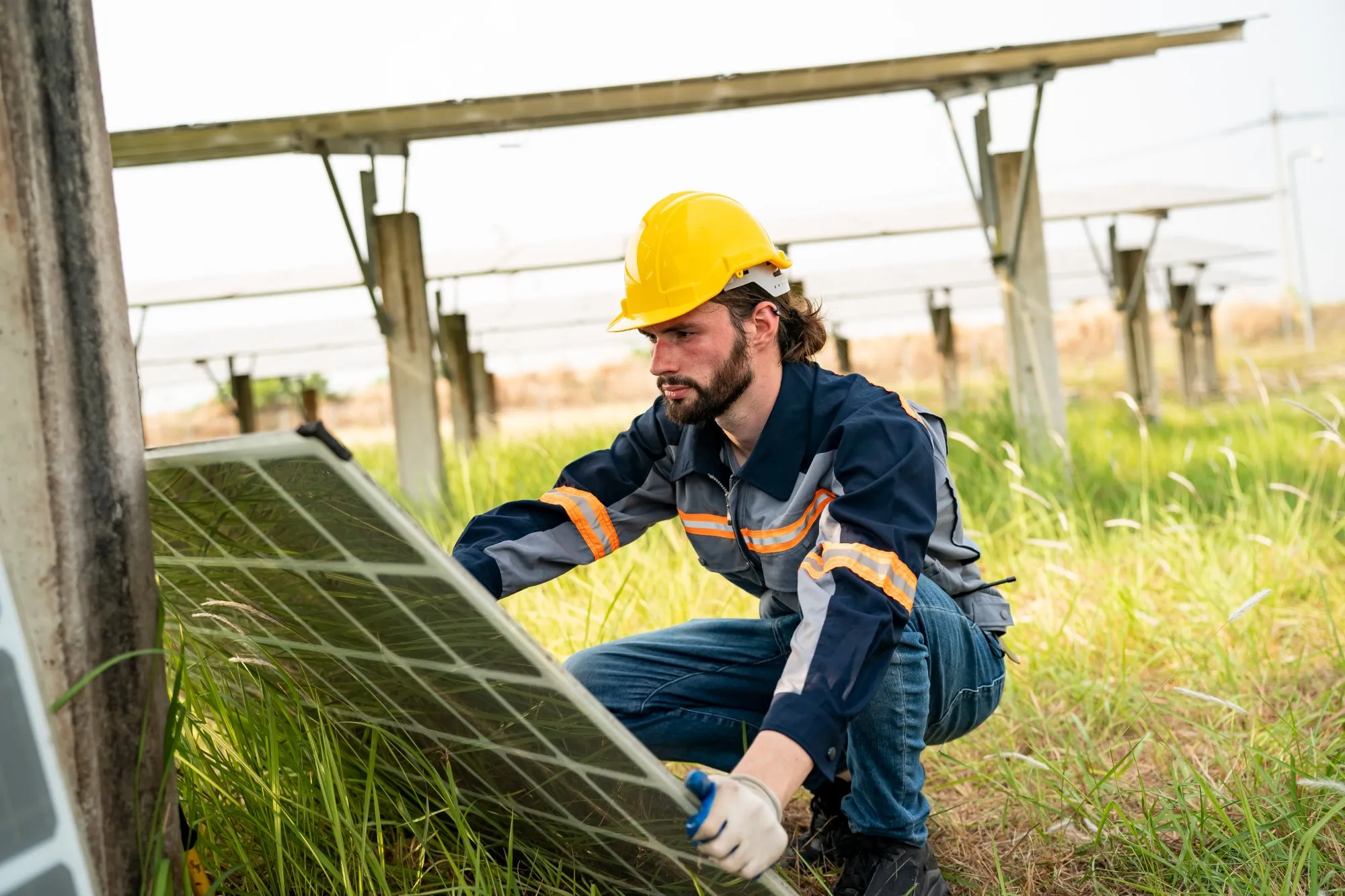
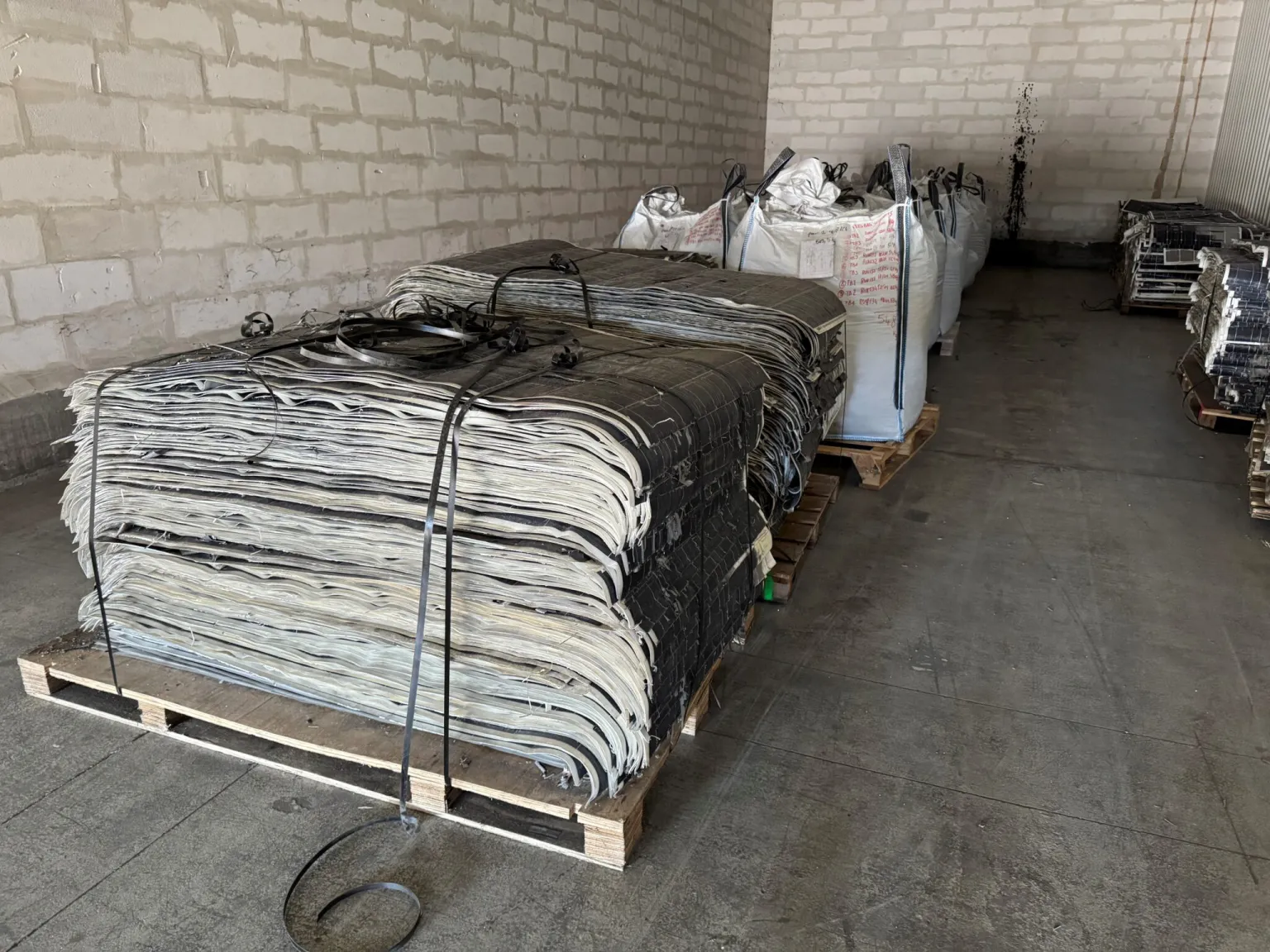
Once the electrical systems are safe, the panels themselves can be removed from their mounting structures. This is typically done manually, with panels stacked on pallets or placed in specialist containers for transport. Care is needed to avoid breakage, as cracked panels still count as WEEE but are harder to recycle and may release hazardous dust.
All panel types, including monocrystalline, polycrystalline and thin-film, can be recycled. Through our solar panel recycling service and ROSI partnership, we recover up to 95% of the materials inside each panel, including silicon, silver, copper, aluminium and glass. This is genuine high-purity recovery, not just shredding and landfill diversion.
3. Dismantling Infrastructure
With the panels removed, the mounting structures, cabling, junction boxes, inverter housings and any on-site buildings or substations are dismantled. Steel racking is typically sent for scrap metal recycling. Concrete pads and foundations are broken up and removed. Cabling, particularly copper cabling, has good recycling value.
4. Battery and BESS Removal
If the solar farm includes battery energy storage, this adds another layer of complexity. Lithium-ion batteries are classified as hazardous goods for transport (ADR regulations) and need to be handled by specialists with the right training, containers and vehicles. We provide ADR-compliant battery collection and recycling as a standard part of our service, including fire-safe storage containers and segregated transport.
5. Hazardous Material Management
Solar farms can contain several hazardous materials beyond the panels themselves. Transformer oils, SF6 gas in switchgear, lead solder in older panels, and cadmium in thin-film modules all need to be identified, safely removed, and disposed of through licensed hazardous waste routes. Getting this wrong isn't just an environmental risk, it's a legal one.
6. Site Restoration
The final stage is returning the land to its pre-development, or agreed, condition. This can involve removing access roads, re-grading the soil, reinstating drainage, reseeding with appropriate grass or crop mixes, and replanting hedgerows or trees. In some cases, ecological surveys may be needed to confirm that habitats have been restored. The specifics will depend on what was agreed in the planning consent and land lease.
Site restoration can take several months depending on the size of the farm and the time of year. Spring and autumn are generally better for reseeding, so phasing the project around the growing season makes sense.
Regulatory Requirements and Compliance
Decommissioning a solar farm in the UK involves several regulatory frameworks. Understanding these upfront helps you avoid fines, delays and failed audits.
WEEE Regulations
Solar panels are classified as electrical equipment under the Waste Electrical and Electronic Equipment (WEEE) Regulations 2013, falling under Category 14. This means they must be disposed of through an authorised treatment facility, not sent to general landfill or mixed waste. As an Environment Agency-regulated AATF, Waste Experts handles this compliantly and provides the documentation to prove it. Learn more about our Duty of Care standards.
Hazardous Waste Regulations
Certain components, including transformer oils, SF6 gas, cadmium-containing thin-film panels, and lithium-ion batteries, are classified as hazardous waste. These require consignment notes, ADR-compliant transport, and processing at licensed facilities. Our hazardous waste disposal service covers all of this.
Planning Conditions
Most solar farm planning permissions include conditions around decommissioning timelines, site restoration standards, and notification requirements. Failure to meet these can result in enforcement action from the local planning authority.
Environmental Permitting
Depending on the site, you may need to consider environmental permits for activities like soil disturbance, water management during restoration, or the handling of contaminated materials. If the site is near a watercourse or in a flood zone, additional controls may apply.
What Does Solar Farm Decommissioning Cost?
Decommissioning costs vary widely depending on the size of the farm, the type of equipment installed, site access, and the condition of the land. The main cost areas are labour and plant hire for dismantling and removal, transport costs based on volume and distance to treatment facilities, waste management and recycling fees for panels, batteries, hazardous materials and general waste, and site restoration work ranging from simple reseeding to full soil remediation and replanting.
Some solar farms set aside a decommissioning bond or reserve fund during the operational phase. If you're acquiring or managing a solar asset, it's worth checking whether this provision exists and whether it's adequate for current costs.
What Happens to the Panels After Decommissioning?
This is the question that matters most from a sustainability perspective. A decommissioned solar farm can generate thousands of panels, and what happens to them determines whether the project's environmental credentials hold up at end of life.
At a basic level, most solar panels are processed through generic e-waste routes where the aluminium frame and junction box are removed for recycling, and the rest of the module (glass, polymer layers and silicon cells) is shredded together. The result is low-grade crushed glass, and the silicon and silver are lost.
Through our ROSI partnership, we do things differently. ROSI uses a combination of thermal, mechanical and chemical processing to separate the panel layers and extract materials at high purity. Glass is recovered at around 95%. Aluminium and copper are almost fully recovered. And critically, the silicon and silver are extracted at a grade high enough to go back into solar manufacturing, not just downcycled into road aggregate.
This is what a genuine circular economy looks like for solar. The materials from end-of-life panels go back into producing new ones, reducing the need for virgin extraction and cutting the carbon intensity of future solar installations.
Managing the Other Waste Streams
Panels are the headline, but a solar farm decommissioning project generates several other waste streams that need proper handling.
Inverters and transformers contain a mix of electronics, copper windings, and sometimes hazardous insulating materials. These fall under electrical waste recycling and high-voltage recycling routes depending on their voltage class.
Battery storage systems, increasingly common on newer solar farms, require specialist handling. Lithium-ion cells are a fire risk if damaged and must be transported in ADR-compliant containers by trained drivers. Our battery recycling service handles the full chain from site collection to certified treatment.
Cabling, steel racking, concrete and fencing go through standard construction waste and scrap metal routes. Contaminated soils or materials exposed to transformer oil leaks may need hazardous waste disposal.
The simplest approach is to use a single waste partner who can manage all of these streams under one service. That's exactly how we work: one point of contact, one set of documentation, and one audit trail across every waste type on site.
Who Is Responsible for Decommissioning?
Responsibility typically sits with the asset owner or operator, though the specifics depend on the lease and planning agreements in place. Asset owners and solar farm operators bear the primary obligation to decommission and restore the site. Landowners should ensure decommissioning provisions are included in their lease, including bond or guarantee arrangements. EPC contractors may be contracted to carry out the physical dismantling work. Waste management partners like Waste Experts handle the collection, transport, recycling and disposal of all waste streams, plus the compliance documentation.
If you're a developer, operator, or EPC working in the renewables sector, having a waste partner in place before decommissioning starts means you can focus on the engineering while we handle the waste logistics and compliance.
The Future of Solar Farm Decommissioning in the UK
The UK government's Clean Power 2030 Action Plan targets 45 to 47 GW of solar capacity. That's a huge expansion, and it means the volume of panels reaching end of life will grow significantly through the 2030s and 2040s. The first major wave of decommissioning is expected as millennium-era installations reach the 25 to 30 year mark.
At the same time, recycling technology is advancing. The kind of high-purity material recovery that our ROSI partnership enables today was not available at scale just a few years ago. As these processes mature and scale up, the economics of solar panel recycling will improve further, potentially turning decommissioning from a pure cost into a partial value recovery exercise.
Regulation is also tightening. Extended producer responsibility (EPR) schemes for solar panels are under discussion at EU level and may influence UK policy. This would shift more of the end-of-life cost onto manufacturers and importers, creating stronger financial incentives for designing panels that are easier to recycle.
For anyone involved in solar energy, the message is clear: plan for decommissioning early, budget for it realistically, and work with partners who can handle the full waste management chain. The solar farms going up today will need decommissioning in 2050. The decisions you make now will determine whether that process is smooth or painful.
We work with solar farm operators, EPC contractors, developers and facilities managers to handle every waste stream generated during decommissioning. That includes solar panel recycling with up to 95% material recovery through our ROSI partnership, battery and BESS recycling, high-voltage equipment disposal, hazardous waste management, and full compliance documentation for every collection.
We collect from anywhere in the UK, and our fleet ranges from small vans for tight-access sites to articulated lorries for large-scale farm clearances. One partner, one set of paperwork, one audit trail.
Get a free quote or speak to an expert about your decommissioning project.
Planning a Decommission?
From phased panel removals to a full site clearance, we handle the collection, the treatment and the compliance paperwork. Single panel to complete solar farm.
Talk to Our Solar Team