.svg)




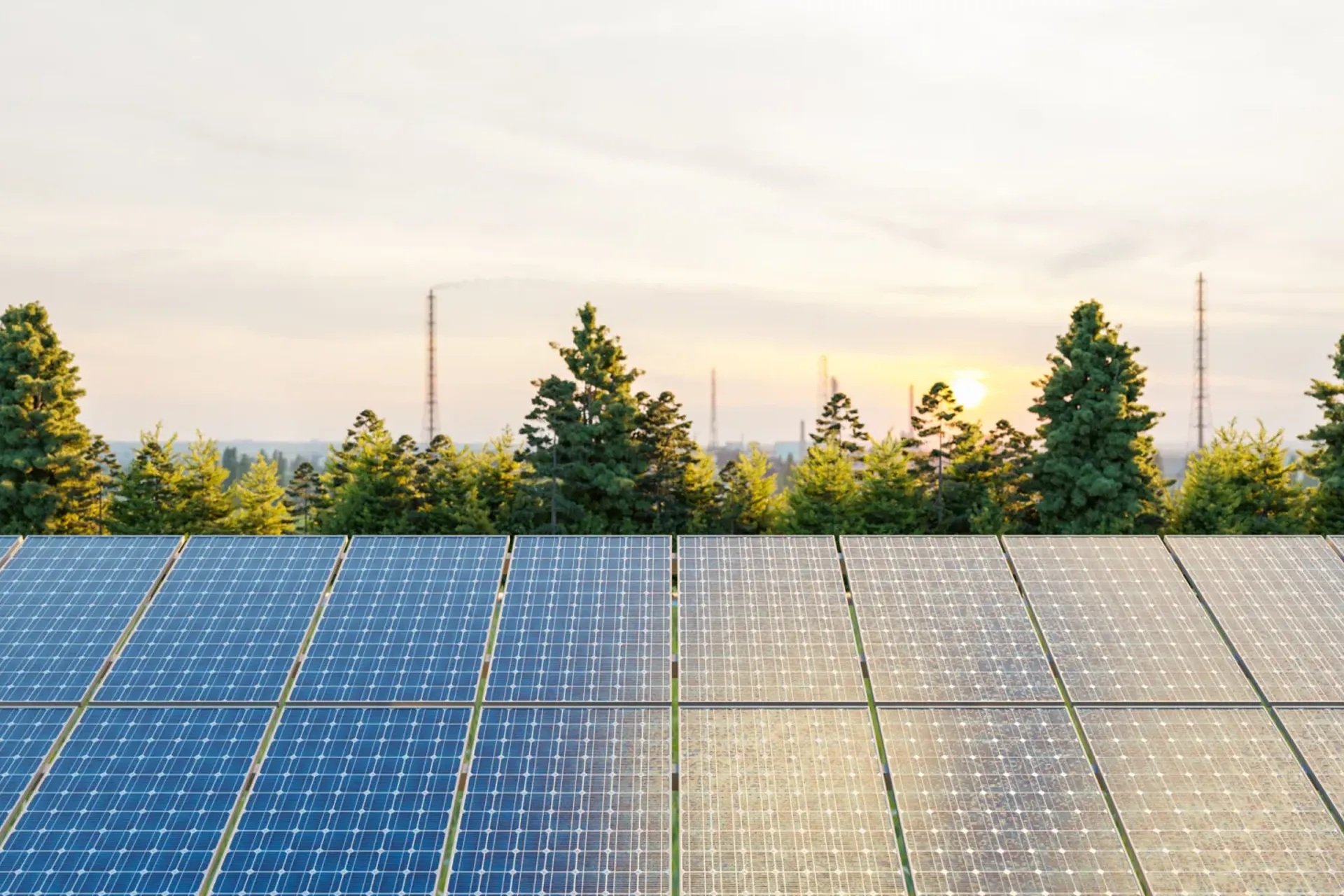
If your business has solar panels reaching end of life - whether that's a rooftop installation, a ground-mounted commercial array, or a portfolio of properties - you have a legal obligation to dispose of them correctly. Solar panels are classified as Waste Electrical and Electronic Equipment (WEEE) under UK law, which means they cannot go to a skip, a general waste bin, or a scrap dealer. They must be collected by a licensed carrier and processed at an approved facility.
This guide covers the legal requirements, what good recycling looks like versus what most of the market actually does, and how to set up a compliant, practical disposal route for any volume of panels.
Why Solar Panel Disposal Is Different from Standard E-Waste
Most businesses have disposed of laptops, printers or office electronics at some point. Solar panel disposal follows the same legal framework - WEEE Regulations 2013, Duty of Care, waste transfer notes - but the physical reality is more complex.
A solar panel is a laminated glass sandwich. The aluminium frame and junction box are straightforward to recover. But the rest of the module - glass bonded to polymer layers bonded to silicon cells - requires specialist processing to recover anything beyond crushed glass. Standard WEEE facilities shred the lot. You get low-grade material and lose most of the value.
The panels also contain materials you need to handle carefully. Lead solder is present in most crystalline silicon panels. Cadmium telluride is used in thin-film modules. Both are hazardous and will leach into soil and groundwater if the panels end up in landfill or are improperly stored outdoors. This is not theoretical - it is a documented environmental risk and a legal liability.
At the same time, panels contain materials worth recovering. Silver is the most significant: the solar industry consumed 19% of global silver supply in 2024, and recovered silver from end-of-life panels can go directly back into cell manufacturing. Silicon, copper, aluminium and high-grade glass are also recoverable at purity levels suitable for reuse - but only through specialist processing.
Your Legal Obligations
Solar panels fall under Category 14 of the WEEE Regulations 2013. As a business user disposing of panels, your obligations are straightforward but non-negotiable.
You must use a licensed waste carrier. The carrier must be registered with the Environment Agency (England), SEPA (Scotland), or Natural Resources Wales. You can check registration on the public carrier register. Any unlicensed collection - including most scrap dealers - puts you in breach of your Duty of Care.
You must obtain a Waste Transfer Note at the point of collection. This is your evidence that the panels were handed to a legitimate carrier. Keep it for at least two years.
The panels must be processed at an Approved Authorised Treatment Facility (AATF). Your recycling provider should be able to supply a WEEE Evidence Note confirming treatment. If they cannot, the panels have not been processed compliantly.
Read our full Duty of Care guide if you want to understand the complete compliance picture. For the regulatory detail on WEEE specifically, the Environment Agency guidance is the authoritative source.
What Most Solar Panel Recycling Actually Does - and Why It Matters
This is the part most providers do not tell you. There is a significant difference between solar panel recycling that is legally compliant and solar panel recycling that genuinely recovers material value.
Basic processing - which most WEEE facilities use - involves removing the aluminium frame and junction box, then shredding the rest of the module. The output is crushed glass mixed with silicon, polymer fragments and metal residues. The glass cannot be used for high-value applications. The silicon and silver are lost. Aluminium is recovered. Copper from cabling is recovered if it was removed separately. This approach diverts panels from landfill and satisfies WEEE compliance requirements, but it recovers perhaps 30-40% of the material value in each panel.
Advanced processing - which our ROSI partnership provides - uses thermal, mechanical and chemical stages to separate the panel layers and recover each material stream at high purity. Glass is recovered at around 95% and at a grade suitable for re-use in glass manufacturing. Silicon is extracted and refined to a grade that can go back into solar cell production. Silver is recovered at a purity suitable for precious metals markets. Aluminium and copper are fully recovered.
This distinction matters for two reasons. First, the environmental argument for solar energy relies on panels being genuinely circular at end of life, not just diverted from landfill into low-grade processing. Second, as Extended Producer Responsibility frameworks develop for solar panels, the quality of recycling will become a reporting requirement, not just a marketing claim.
How to Arrange Solar Panel Disposal
The practical process is straightforward if you use the right provider.
Tell the provider what you have: panel type (monocrystalline, polycrystalline or thin-film), quantity, whether they are on frames or already removed, and site access details. Our solar panel recycling service accepts all panel types including monocrystalline, polycrystalline and thin-film, and our fleet ranges from small vans for roof access to articulated lorries for ground-mounted array clearances.
If the panels are still mounted, you will need a qualified electrician to isolate and disconnect the system before removal. We can coordinate this as part of a managed service, or work alongside your existing electrical contractor.
Once collected, we transport panels to our processing partner ROSI's facility. You receive a Waste Transfer Note at collection and a WEEE Evidence Note confirming treatment. These are your compliance documents - retain them as part of your Duty of Care records.
For large volumes, ongoing programmes (such as installer returns or network-wide upgrade cycles), or solar farm decommissioning, see our nationwide PV panel collection service, our renewables sector page and our solar farm decommissioning guide.

Common Scenarios and What to Do
Commercial rooftop replacement
You are replacing an ageing rooftop installation. Your installer will typically remove the old panels as part of the job. Confirm before work begins that they are using a licensed WEEE carrier and can provide a Waste Transfer Note and WEEE Evidence Note. If they cannot, arrange the disposal separately through Waste Experts and co-ordinate the timing with your installer.
Storm or impact damage
Damaged panels are still WEEE and still need compliant disposal. Cracked or shattered panels are more hazardous to handle due to glass fragments and the risk of releasing hazardous dust from the cell layers. We provide specialist containment and handling for damaged panels - do not attempt to move shattered modules without appropriate PPE and packaging.
Property clearance or sale
If you are clearing a property with solar panels installed - whether as part of a sale, demolition or change of use - the panels must be removed and disposed of before the building is handed over. Leaving panels in place does not transfer the disposal obligation to the new owner unless this is explicitly agreed and documented.
End-of-lease returns for installers
If you are an MCS-registered installer regularly removing panels from replacement or upgrade jobs, ad-hoc disposal is inefficient. We work with installers on framework agreements covering scheduled collections, on-site container provision, and consolidated documentation for your records. Contact us to discuss a programme that fits your workflow.
Solar farm decommissioning
This is the most complex scenario and deserves its own planning process. See our full solar farm decommissioning guide for a step-by-step walkthrough of what is involved.
Inverters: The Waste Stream Everyone Forgets
Inverters fail faster than panels - typically 10 to 15 years against a panel's 25 to 30. This means a large proportion of UK solar installations are already generating inverter waste, even where the panels themselves are still serviceable.
Inverters are classified as WEEE and must be disposed of through the same licensed routes. They contain copper windings, power electronics, aluminium housings and in many cases capacitors with residual stored charge - which means they need careful handling before transport. Do not place end-of-life inverters in general waste or skip hire.
We collect inverters alongside panels in a single collection, or separately where the replacement cycle means inverters are coming out of service more frequently. See our electrical waste recycling service for details.
What Happens to Your Panels After Collection
Through our ROSI partnership, panels go to a specialist facility where processing follows this sequence. The aluminium frame and junction box are removed first. The panel then goes through thermal processing which drives off the polymer encapsulant layers, separating the glass from the cell layers without damaging the silicon or silver. The glass is recovered at around 95% purity. The silicon cells and silver are then extracted through mechanical and chemical stages and refined to a grade suitable for reuse in solar manufacturing.
The output is not waste in any meaningful sense. It is a recovered material stream that can go back into producing the next generation of solar panels. This is what a genuine circular economy for solar looks like - and it is why we chose ROSI as our processing partner rather than a standard WEEE shredder.
You receive a certificate confirming the weight of material recovered and the processing route. For businesses with ESG reporting requirements, this gives you accurate data on the circularity of your solar panel disposal - not just a tick-box saying waste was diverted from landfill.
Frequently Asked Questions
Can solar panels go in a skip?
No. Solar panels are classified as WEEE and cannot be disposed of in a skip, general waste bin or through unlicensed scrap. Skip hire operators are not licensed to accept WEEE. Putting panels in a skip is a breach of your Duty of Care and can result in enforcement action.
Can I take solar panels to a household waste recycling centre?
Household waste recycling centres are for domestic waste. If you are a business disposing of panels from commercial premises or as part of a trade activity, you must use a licensed commercial WEEE collector.
What if my original solar installer has gone out of business?
Producer responsibility under WEEE Regulations sits with the manufacturer or importer, not necessarily the installer. If your installer has ceased trading, contact WERCS - our Producer Compliance Scheme - or arrange collection directly through a licensed WEEE carrier like Waste Experts. We can collect regardless of who originally installed the panels.
Do I need to remove the panels before collection, or can you collect from the roof?
We can collect panels that have already been removed and palletised, or we can coordinate rooftop removal as part of a managed service. The panels must be electrically isolated by a qualified electrician before any physical removal work takes place.
How much does solar panel disposal cost?
Cost depends on volume, panel condition, site access, and whether removal is required. For a straightforward collection of palletised panels, request a solar panel collection quote and we will come back the same day. We are transparent about pricing and do not charge hidden fees for documentation or reporting.
Solar panel disposal is a legal requirement with a right way and a wrong way. The right way uses a licensed carrier, produces proper documentation, and processes panels through a facility that genuinely recovers material value rather than just shredding the lot.
We collect solar panels from anywhere in the UK, handle all panel types, and process them through our ROSI partnership to recover up to 95% of the material in each module. Every collection includes a Waste Transfer Note and WEEE Evidence Note as standard.
Get a quote or speak to our team about your solar panel disposal requirements.
Need Your Panels Collected?
We collect end-of-life solar panels from anywhere in the UK and recover up to 95% of the material through our ROSI partnership, with full WEEE documentation for every load.
Get a Collection Quote